I did something novel today--I wrote my first letter to the editor! I was reading my latest issue of Smithsonian Magazine, as is my tradition, and I read a very interesting article about native cannibals in New Guinea. The reporter ventured into an extremely remote place to visit a tribe--he was the first light-skinned person they've ever seen there. All others were far too scared to go into that territory. This is one of the only existing cannabalistic tribes left. Read the whole story in the Sept. 2006 issue of Smithsonian.
The part that struck me and inspired me to write the letter was where the people (the Korowai) told of "a powerful spirit, named Ginol, who created the present world after having destroyed the previous four...." (vaguely reminiscent of the Flood) The tradition continues, "white-skinned ghost-demons will one day invade Korowai land. Once the laleo [what they call the white-skinned ones] arrive, Ginol will obliterate this fifth world. The land will split apart, there will be fire and thunder, and mountains will drop from the sky. This world will shatter, and a new one will take its place." Another part of the article quotes a Dutch missionary who declined to penetrate the Korowai land after he heard the story that "'a very powerful mountain god warned the Korowai that their world would be destroyed by an earthquake if outsiders came into their land to change their customs.'"
Here's the letter I emailed to the editor:
It's amazing that the remote Korowai people, who have never had contact with Western people, much less Christian missionaries, could have in their religious tradition a prophecy that a powerful god would cause fire, thunder, and land to split apart and end the earth when outsiders with other traditions come to their land. Have they really never read the apocalyptic vision in Revelation 16:18-20--"and there were noises and thunderings and lightnings; and there was a great earthquake, such a mighty and great earthquake as had not occured since men were on the earth....Then every island fled away, and the mountains were not found"--along with Matthew 24:14--"And this gospel of the kingdom will be preached in all the world as a witness to all the nations, and then the end will come"?
I'm sure it won't be published. Smithsonian is a scientific institution, very proud of its athiestic positions and evolutionary teachings. But maybe it would be interesting from an anthropological point of view. Probably not, though--Satan works hard to intercept any light of truth from institutions such as that. But God is more powerful. Pray that the Gospel really will be preached to all nations soon.
Wednesday, August 30, 2006

Sunday, August 27, 2006
Quote for the day
Just wanted to share a beautiful quote today. I hope whoever reads this will find as much comfort in sorrow as I have.
"The Saviour longs to give us a greater blessing than we ask; and He delays the answer to our request that He may show us the evil of our own hearts, and our deep need of His grace. He desires us to renounce the selfishness that leads us to seek Him. Confessing our helplessness and bitter need, we are to trust ourselves wholly to His love." Ellen G. White, The Desire of Ages, p. 200
P.S. If you are ever sad about anything, open up pretty much any page EGW has written and you will find God's comfort more beautifully described than you could ever even dream up yourself.
"The Saviour longs to give us a greater blessing than we ask; and He delays the answer to our request that He may show us the evil of our own hearts, and our deep need of His grace. He desires us to renounce the selfishness that leads us to seek Him. Confessing our helplessness and bitter need, we are to trust ourselves wholly to His love." Ellen G. White, The Desire of Ages, p. 200
P.S. If you are ever sad about anything, open up pretty much any page EGW has written and you will find God's comfort more beautifully described than you could ever even dream up yourself.
Tuesday, August 22, 2006
Music
Sometimes I wonder why I play the violin.
Most people have useful jobs, such as a doctor or a bricklayer or a mailman or salesman or air conditioner repairman.
But what is the point of playing a musical instrument?
If I were a singer, people would remember the words to my songs, and if they were good words, they could remember a good message from them. But my music has no words, therefore no meaning, good or bad.
But there is absolutely no purpose for playing a musical instrument.
Which is exactly why I do it.
Evolutionists can think up purposes for so many things on Earth: photosynthesis, plate tectonics, hydrogen, DNA, and so on. But they often get hung up on music. The human ear is profoundly complex--years of study cannot fully give a comprehension of exactly how sound waves are transformed into signals in the brain which are interpreted as meaningful sounds. Evolutionists can make a case for the sociological advantage of communication in verbal language. But what about musical sounds, which do not have any symbolic meaning and cannot be identified with any other sense?
I can't think, off the top of my head, of anything else on earth that does not have any other meaning through any other sense besides instrumental music. I suppose you could count the kind of gas that you can only smell and not see or feel (although sophisticated devices may be able to measure their weight). But most objects can be perceived through a combination of senses--sight, touch, smell. Spoken words are only perceived through the ear, but they symbolize things that can be perceived some other way: if I say "chair" you would have the sensual experience of an object with legs and a platform to sit on, perhaps with a smooth or soft feel, and the smell of leather or rubber. And concepts such as "kindness" are equated with physical actions and physical objects, such as giving a glass of water to a thirsty enemy.
If you are aquainted with music, you understand what I mean by the emotional, even physical, response to a certain arrangement of harmonies--that the stimulus is communicating something, but not something clearly defined such as a "chair" or "strawberry" or even "kindness" or "hope." The communication draws us to something unknown.
"Physical pleasures are subdivided into two types. First there are those which fill the whole organism with a conscious sense of enjoyment...as when we eat and drink.... However, there are also pleasures which satisfy no organic need, and relieve no previous discomfort. They merely act, in a mysterious but quite unmistakable way, directly on our senses....Such is the pleasure of music." (Thomas More, Utopia)
C.S. Lewis describes this well in Mere Christianity: "Creatures are not born with desires unless satisfaction for those desires exists....If I find in myself a desire which no experience in this world can satisfy, the most probably explanation is that I was made for another world."
In The Great Divorce, Lewis describes an angelic citizen of Heaven talking with a painter visiting there: "'When you painted on earth...it was because you caught glimpses of Heaven in the earthly landscape. The success of your painting was that it enabled others to see the glimpses too...Light itself was your first love; you loved paint only as a means of telling about light.'"
If the visual arts exist to give humans glimpses of light through what can be seen and felt with several senses (and what can at least attempt to be explained through naturalistic theory), how much more can music, otherwise completely useless as it is, give us a glimpse of something even less humanly explainable?
Most people have useful jobs, such as a doctor or a bricklayer or a mailman or salesman or air conditioner repairman.
But what is the point of playing a musical instrument?
If I were a singer, people would remember the words to my songs, and if they were good words, they could remember a good message from them. But my music has no words, therefore no meaning, good or bad.
But there is absolutely no purpose for playing a musical instrument.
Which is exactly why I do it.
Evolutionists can think up purposes for so many things on Earth: photosynthesis, plate tectonics, hydrogen, DNA, and so on. But they often get hung up on music. The human ear is profoundly complex--years of study cannot fully give a comprehension of exactly how sound waves are transformed into signals in the brain which are interpreted as meaningful sounds. Evolutionists can make a case for the sociological advantage of communication in verbal language. But what about musical sounds, which do not have any symbolic meaning and cannot be identified with any other sense?
I can't think, off the top of my head, of anything else on earth that does not have any other meaning through any other sense besides instrumental music. I suppose you could count the kind of gas that you can only smell and not see or feel (although sophisticated devices may be able to measure their weight). But most objects can be perceived through a combination of senses--sight, touch, smell. Spoken words are only perceived through the ear, but they symbolize things that can be perceived some other way: if I say "chair" you would have the sensual experience of an object with legs and a platform to sit on, perhaps with a smooth or soft feel, and the smell of leather or rubber. And concepts such as "kindness" are equated with physical actions and physical objects, such as giving a glass of water to a thirsty enemy.
If you are aquainted with music, you understand what I mean by the emotional, even physical, response to a certain arrangement of harmonies--that the stimulus is communicating something, but not something clearly defined such as a "chair" or "strawberry" or even "kindness" or "hope." The communication draws us to something unknown.
"Physical pleasures are subdivided into two types. First there are those which fill the whole organism with a conscious sense of enjoyment...as when we eat and drink.... However, there are also pleasures which satisfy no organic need, and relieve no previous discomfort. They merely act, in a mysterious but quite unmistakable way, directly on our senses....Such is the pleasure of music." (Thomas More, Utopia)
C.S. Lewis describes this well in Mere Christianity: "Creatures are not born with desires unless satisfaction for those desires exists....If I find in myself a desire which no experience in this world can satisfy, the most probably explanation is that I was made for another world."
In The Great Divorce, Lewis describes an angelic citizen of Heaven talking with a painter visiting there: "'When you painted on earth...it was because you caught glimpses of Heaven in the earthly landscape. The success of your painting was that it enabled others to see the glimpses too...Light itself was your first love; you loved paint only as a means of telling about light.'"
If the visual arts exist to give humans glimpses of light through what can be seen and felt with several senses (and what can at least attempt to be explained through naturalistic theory), how much more can music, otherwise completely useless as it is, give us a glimpse of something even less humanly explainable?
Wednesday, August 09, 2006
Prayer request
To all my friends who like to pray for prayer requests, I have a personal request: I just found out that they changed the rehearsal schedule for the Redlands Symphony Orchestra this year to have Friday night rehearsals. The RSO is the only orchestra I play with anymore and one of the last ones to not have any Friday night or Saturday services; I used to play with the San Bernardino Symphony but I let that one go because they have Saturday afternoon rehearsals. Those who know me know how much I love playing in orchestra; music is my career and my passion, and although I get most of my income from teaching, playing in orchestra is one of my favorite things to do. I've played in orchestras every year since fifth grade, and it's been the foundational thing in my musical life. I can't forsee any orchestras not having any Sabbath conflicts. Satan is working overtime on God's people who "keep the commandments of God" (Rev. 14:12), especially the overlooked fourth commandment. I know I'm not alone in these kinds of struggles--my recent study of Daniel 9 taught me that we ought to pray for our people, for all believers, because we are all in this together. May God strengthen us for whatever conflicts we have ahead of us in our communal struggle to live according to God's commandments.
Monday, July 31, 2006
July 31, 2006
It is RAINING IN SOUTHERN CALIFORNIA. It's July. Not just a little drizzle that evaporates before it hits the ground, but real rain--all morning. This is weird. Of course, it's also been about 115 degrees the last week or so.
The earth is going crazy. Everybody come to Southwest Youth Conference. www.swyouthconference.org
The earth is going crazy. Everybody come to Southwest Youth Conference. www.swyouthconference.org
Sunday, July 30, 2006
Strange places for a cat





You would think that in a small apartment a large cat would have fewer places to get comfortable. Then you remember what a cat is.
Saturday, July 22, 2006
A parable
For the customs of the peoples are futile; for one cuts a tree from the forest, the work of the hands of the workman, with the ax. They are upright, like a palm tree, and they cannot speak; they must be carried, because they cannot go by themselves. Do not be afraid of them, for they cannot do evil, nor can they do any good. Thus you shall say to them: "The gods that have not made the heavens and the earth shall perish from the earth and from under these heavens."Jeremiah 10:3, 5, 11
We love him, because he first loved us. 1 John 4:19
Once there was a young lady who fell in love with a young man. She fell in love with him because he was the man of her dreams. He was everything she could have wanted. Since she was a little girl and once had been rescued from an uncomfortable situation in a public park by a friendly policeman who happened to be nearby, she had always wanted to marry a policeman. When she became a teenager, she and her girlfriends would talk about their future marriages, and she would envision exactly what she wanted in a man. She had a mental picture of an extremely tall man, with brilliant platinum blonde hair, and light blue eyes. He would be gentle and kind, and loved horseback riding and reading books about ancient history, just like her daddy did. He would sing in the church choir, his favorite food was peanut butter jelly sandwiches, and--even though she didn't admit this to her girlfriends--he would have a really odd, loud laugh like her older brother.
When this young lady went to college, her friends started looking for husbands, but she didn't know if she would ever find a gentleman who was like what she wanted. After all, she was kind of particular...But one day, she went to choir rehearsal, and as the director told a silly joke she was startled to hear a loud and rather annoying laugh coming from the back of the classroom. Her eyes grew big when she turned to find a tall, platinum blonde boy with pale blue eyes. On the way out of class, she made an effort to leave the classroom with him, and out of courtesy introduced herself and asked his name and what he was studying.
"Law enforcement," he said.
Since it was lunchtime, she invited him to join her with her friends at the cafeteria. He ate nothing but two peanut butter jelly sandwiches. As the conversation progressed, it was discovered that his favorite hobbies were horseback riding and reading books about ancient history. She was happy; she had found her man.
Unfortunately, the story doesn't end there. Or rather...it does. The unhappy ending for the young woman is that this gentleman had absolutely no interest in her. In fact, a few months later he was seen holding hands with another girl from Finland.
There was also another young man, 21 years old, who lived in a large metropolitan area. He had just reached the age where he could drink legally, and was definitely taking advantage of that opportunity to barhop with his older friends. He was very attractive and learned that bars were excellent places to find women who were more drunk than he, and were perfectly willing to go home with him. In his large apartment (which his parents paid for), his living room was transformed into a home theater. He went to school every day to become a banker, and was expecting to do extremely well financially. He lived alone, but he was not often lonely, because as soon as he came home from school, he would take a drink, watch TV, and head out with his friends to the bar. It was fun, he was happy; he had found his life.
Does the young man's story end there? Probably not. Because the young woman in love and the young man who loved his life both faced the same problem--That which they loved did not return their love. The people in Jeremiah's time, in ancient days, longed for the idols of the surrounding nations; gods of wood and stone. They found happiness in the symbols they worshipped. But the gods did not love them in return, so all of their happiness was completely useless. Today, people's devotions might be directed to somewhat different types of idols--pleasures, entertainment, ambitions for riches and fame. But no matter how much happiness these things may bring us at the time they are received, they will not love us in return. And if they don't return our love, our devotion is useless.
God alone has given us a promise that cannot be broken. "The LORD hath appeared of old unto me, [saying], Yea, I have loved thee with an everlasting love: therefore with lovingkindness have I drawn thee." (Jer. 31:3) "For God so loved the world...." (John 3:16) We can be assured that this is one relationship where our love can be returned. That's the only useful kind of devotion in the universe.
We love him, because he first loved us. 1 John 4:19
Once there was a young lady who fell in love with a young man. She fell in love with him because he was the man of her dreams. He was everything she could have wanted. Since she was a little girl and once had been rescued from an uncomfortable situation in a public park by a friendly policeman who happened to be nearby, she had always wanted to marry a policeman. When she became a teenager, she and her girlfriends would talk about their future marriages, and she would envision exactly what she wanted in a man. She had a mental picture of an extremely tall man, with brilliant platinum blonde hair, and light blue eyes. He would be gentle and kind, and loved horseback riding and reading books about ancient history, just like her daddy did. He would sing in the church choir, his favorite food was peanut butter jelly sandwiches, and--even though she didn't admit this to her girlfriends--he would have a really odd, loud laugh like her older brother.
When this young lady went to college, her friends started looking for husbands, but she didn't know if she would ever find a gentleman who was like what she wanted. After all, she was kind of particular...But one day, she went to choir rehearsal, and as the director told a silly joke she was startled to hear a loud and rather annoying laugh coming from the back of the classroom. Her eyes grew big when she turned to find a tall, platinum blonde boy with pale blue eyes. On the way out of class, she made an effort to leave the classroom with him, and out of courtesy introduced herself and asked his name and what he was studying.
"Law enforcement," he said.
Since it was lunchtime, she invited him to join her with her friends at the cafeteria. He ate nothing but two peanut butter jelly sandwiches. As the conversation progressed, it was discovered that his favorite hobbies were horseback riding and reading books about ancient history. She was happy; she had found her man.
Unfortunately, the story doesn't end there. Or rather...it does. The unhappy ending for the young woman is that this gentleman had absolutely no interest in her. In fact, a few months later he was seen holding hands with another girl from Finland.
There was also another young man, 21 years old, who lived in a large metropolitan area. He had just reached the age where he could drink legally, and was definitely taking advantage of that opportunity to barhop with his older friends. He was very attractive and learned that bars were excellent places to find women who were more drunk than he, and were perfectly willing to go home with him. In his large apartment (which his parents paid for), his living room was transformed into a home theater. He went to school every day to become a banker, and was expecting to do extremely well financially. He lived alone, but he was not often lonely, because as soon as he came home from school, he would take a drink, watch TV, and head out with his friends to the bar. It was fun, he was happy; he had found his life.
Does the young man's story end there? Probably not. Because the young woman in love and the young man who loved his life both faced the same problem--That which they loved did not return their love. The people in Jeremiah's time, in ancient days, longed for the idols of the surrounding nations; gods of wood and stone. They found happiness in the symbols they worshipped. But the gods did not love them in return, so all of their happiness was completely useless. Today, people's devotions might be directed to somewhat different types of idols--pleasures, entertainment, ambitions for riches and fame. But no matter how much happiness these things may bring us at the time they are received, they will not love us in return. And if they don't return our love, our devotion is useless.
God alone has given us a promise that cannot be broken. "The LORD hath appeared of old unto me, [saying], Yea, I have loved thee with an everlasting love: therefore with lovingkindness have I drawn thee." (Jer. 31:3) "For God so loved the world...." (John 3:16) We can be assured that this is one relationship where our love can be returned. That's the only useful kind of devotion in the universe.
Wednesday, June 21, 2006
Dick Koobs, MD 1928-2006

On July 12 Loma Linda lost a brilliant scientist and a great friend of the community. Dr. Dick Koobs passed away after battling lymphoma. He will be greatly missed by the faculty at the university where he used to teach and practice pathology, and by the many friends he and his wonderful wife Ardyce have made with their generosity and helpfulness. I feel like one of the many family members the Koobs have adopted, and I'll always be thankful of all the help and friendship they've given me since I've lived here.
Monday, May 29, 2006
News from friends
The news from friends is that some of them have graduated this past weekend (good for them) and left town (bad for me). I'm thinking specifically of Rachel and Eric Nelson, whom I got to know pretty well since they've been my 2-doors-down neighbors. They're off to Sacramento for residency. Rachel knocked on my door at 5:30 this evening to say goodbye. Fortunately, I am probably going to get a chance to visit them in July while I'm up north for a music institute.
The good news is that my friend James Lee, an excellent composer, is having an orchestral work premiered by the National Symphony in October, conducted by Leonard Slatkin! I'm so excited for him. You can read the blurb here. It's a piece called "Beyond Rivers of Vision," and the premise of the piece could be a great witnessing tool. James is also getting married in August to a nice Brazilian girl I got to meet at GYC last year. I love seeing how God has blessed my friends' lives.
The good news is that my friend James Lee, an excellent composer, is having an orchestral work premiered by the National Symphony in October, conducted by Leonard Slatkin! I'm so excited for him. You can read the blurb here. It's a piece called "Beyond Rivers of Vision," and the premise of the piece could be a great witnessing tool. James is also getting married in August to a nice Brazilian girl I got to meet at GYC last year. I love seeing how God has blessed my friends' lives.
Tuesday, May 16, 2006
Spring comes to Loma Linda
This title is a bit misleading--actually, there is really no such thing as springtime in Southern California. In the East, where I come from, Spring is a magical time after months of barrenness when all green things spring to life at once, within a week, transforming the landscape from a dead wasteland to a verdant, luxurious forest. In California, each tree decides on its own when Spring will be (if it loses its leaves at all). However, there are two seasons here--I would name them the Growing Season and the Non-Growing Season. In the chilly months, not much happens in the garden. Then there is a time when all the plants decide to make up for lost time during December through April by doing a whole year's worth of growing at once. That season started this week. (Unfortunately, most of this "Spring" growth applies to weeds.)
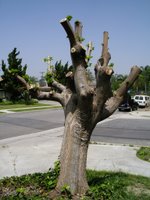 One notable exception to the non-deciduous landscape is my mulberry tree, formerly a beautiful, spreading tree which provided shade to my entire lawn. It loses its leaves every year, but this year it lost more than leaves. Here it is, again beginning to show signs of life after experiencing a major trauma a few months ago. (We miss you, tree!)
 Loquats for sale! All you can pick! Actually, loquats for free! Hey, take the whole tree if you want. Monica constantly threatens to chop it down anyway (so it's not the favorite tree around here...) For those friends out East who may not be aquainted with loquats, they are stone fruit a bit like apricots, but somewhat more rubbery and much less tasty.
 The calla lilies are on their way out, but still have a few nice blooms. The roses have also re-emerged after a serious pruning.

The villains of the garden are the Huge Scary Weeds. I don't know what their real name is, but Huge Scary Weeds is descriptive enough for me. They are in the process of taking over the lawn. Perhaps the like the extra sun that the mulberry previously blocked out (and now that it is but a stub, alas...sigh....) I think the Huge Scary Weeds grow a half a foot a day.

This picture is of what should be my front lawn.
 One notable exception to the non-deciduous landscape is my mulberry tree, formerly a beautiful, spreading tree which provided shade to my entire lawn. It loses its leaves every year, but this year it lost more than leaves. Here it is, again beginning to show signs of life after experiencing a major trauma a few months ago. (We miss you, tree!)
 Loquats for sale! All you can pick! Actually, loquats for free! Hey, take the whole tree if you want. Monica constantly threatens to chop it down anyway (so it's not the favorite tree around here...) For those friends out East who may not be aquainted with loquats, they are stone fruit a bit like apricots, but somewhat more rubbery and much less tasty.
 The calla lilies are on their way out, but still have a few nice blooms. The roses have also re-emerged after a serious pruning.
The villains of the garden are the Huge Scary Weeds. I don't know what their real name is, but Huge Scary Weeds is descriptive enough for me. They are in the process of taking over the lawn. Perhaps the like the extra sun that the mulberry previously blocked out (and now that it is but a stub, alas...sigh....) I think the Huge Scary Weeds grow a half a foot a day.

This picture is of what should be my front lawn.
Friday, May 05, 2006
Delight
Part of my daily morning worship routine is to pick a few memory verse cards to review. Often I just check that I still have them memorized, but often I'll run into a verse that I'd like to contemplate, either because it has an application to something in my life at the time, or I just don't understand it. Today the first verse I picked up was Psalm 37:4--
"Delight yourself in the Lord, and he will give you the desires of your heart." (NIV)
The KJV adds the word "also" between "thyself" and "in the Lord;" a few other versions replace "delight yourself" with "take delight," but otherwise, they are pretty much all in agreement. The context of the verse has some equally beautiful passages: "Rest in the Lord, wait patiently for him" (vs. 7), "Commit thy way unto the LORD; trust also in him; and he shall bring [it] to pass" (vs. 5), and so on. A very comforting psalm.
Too comforting. Being a human, I have had the experience of dealing with desired things. So the automatic reaction to this verse was, "yeah, maybe..." That reaction forced me to stop and take the rest of my worship time to really think this verse through. As a Christian, my struggle is with faith. Faith does not always come easily. Faith, to me, is saying, "OK, Lord, of course you're right!" when I really want to say "well, maybe..." or "but to me, it looks like..." This requires study, and that's what the Bible is for, as well as the shared experiences of other people.
So I thought about what this verse says. It says, "Delight yourself in the Lord, and he will give you the desires of your heart." No versions I saw anywhere said,
"Delight yourself in the Lord, and he might give you the desires of your heart, if you're lucky."
"Delight yourself in the Lord, and he will give you the desires of your heart, sometime in the indefinite future, but don't count on it in this life, anyway."
"Delight yourself in the Lord, and he will give you the desires of your heart, if those desires happen to be the right ones."
"Delight yourself in the Lord, and he will give you the desires of your heart, if you're good enough, and eat your vegetables."
So what does this verse mean? And what can I desire that he will give me? I desire an Audi TT, a ten-acre estate in the country, a position in the LA Philharmonic, and the man of my dreams to fall desperately in love with me.
This leads to a natural human conclusion. When a human looks at this verse, the eye is naturally drawn to the last half of the phrase, the "he will give you the desires" part. (Really, confess!) But the first half is the important part. "Delight yourself in the Lord." Look at the words "delight" vs. "desire." Which has heavenly associations, and which has earthly ones?
Here's my conclusion, for 7:52 AM on an Friday morning: Our priority should be for the first half of the phrase. Occupy yourself with the "delight." Make it a lifelong project to figure out what it means to "delight in the Lord," and chances are pretty good you won't have so much leftover time or brainpower to bother with the "desires of your heart" part.
"Delight yourself in the Lord, and he will give you the desires of your heart." (NIV)
The KJV adds the word "also" between "thyself" and "in the Lord;" a few other versions replace "delight yourself" with "take delight," but otherwise, they are pretty much all in agreement. The context of the verse has some equally beautiful passages: "Rest in the Lord, wait patiently for him" (vs. 7), "Commit thy way unto the LORD; trust also in him; and he shall bring [it] to pass" (vs. 5), and so on. A very comforting psalm.
Too comforting. Being a human, I have had the experience of dealing with desired things. So the automatic reaction to this verse was, "yeah, maybe..." That reaction forced me to stop and take the rest of my worship time to really think this verse through. As a Christian, my struggle is with faith. Faith does not always come easily. Faith, to me, is saying, "OK, Lord, of course you're right!" when I really want to say "well, maybe..." or "but to me, it looks like..." This requires study, and that's what the Bible is for, as well as the shared experiences of other people.
So I thought about what this verse says. It says, "Delight yourself in the Lord, and he will give you the desires of your heart." No versions I saw anywhere said,
"Delight yourself in the Lord, and he might give you the desires of your heart, if you're lucky."
"Delight yourself in the Lord, and he will give you the desires of your heart, sometime in the indefinite future, but don't count on it in this life, anyway."
"Delight yourself in the Lord, and he will give you the desires of your heart, if those desires happen to be the right ones."
"Delight yourself in the Lord, and he will give you the desires of your heart, if you're good enough, and eat your vegetables."
So what does this verse mean? And what can I desire that he will give me? I desire an Audi TT, a ten-acre estate in the country, a position in the LA Philharmonic, and the man of my dreams to fall desperately in love with me.
This leads to a natural human conclusion. When a human looks at this verse, the eye is naturally drawn to the last half of the phrase, the "he will give you the desires" part. (Really, confess!) But the first half is the important part. "Delight yourself in the Lord." Look at the words "delight" vs. "desire." Which has heavenly associations, and which has earthly ones?
Here's my conclusion, for 7:52 AM on an Friday morning: Our priority should be for the first half of the phrase. Occupy yourself with the "delight." Make it a lifelong project to figure out what it means to "delight in the Lord," and chances are pretty good you won't have so much leftover time or brainpower to bother with the "desires of your heart" part.
Thursday, May 04, 2006
The Portrait Artist

While I'm bragging, I must direct your attention (especially if you are a LLU student) to the second floor of the Del Webb library, where my dad's oil portraits of LLU faculty memebers are displayed. Check them out sometime!
The Cute Nephew

What's the point of a blog if you can't use it to show off pictures of your cute little nephew?
This is Christopher Kime.
(Stay tuned for pictures of the Cute Little Niece, also the Glamorous Model Athelete Niece.)
Friday, April 28, 2006


Ein Deutsches Requiem
Blessed are they that mourn:
for they shall be comforted.
Matthew 5:4
They that sow in tears
shall reap in joy.
He that goeth forth and weepeth,
bearing precious seed,
shall doubtless come again with rejoicing
bringing his sheaves with him.
Psalm 126:
A few weeks ago I had the opportunity, for the first time, to play in a perfomance of Johannes Brahms' Ein Deutsches Requiem. Brahms is probably my favorite composer, and if I were asked the question, "What do you think is the greatest piece of music ever written?" it would be difficult to answer, but I suppose this would be near the top of the list. A requiem is a mass service for the dead which almost always uses the same traditional Latin text. Brahms wanted his Requiem to be a reflection of the German Lutheran tradition instead of the Catholic; a German Requiem, so he collected his own text from the German translation of the Bible. The skill with which Brahms collected and juxtaposed these incomprehensibly beautiful texts and set them to music which breathes life into them seems almost as inspired as the texts themselves. And the most amazing thing is that Brahms was pretty much an athiest. God can work through people who do not even believe or follow Him as vessels for His glory!
The first movement, as I have quoted above, is a masterful combination of Old and New Testament verses with a similar idea of comfort. The second movement is a very solemn funeral march, complete with the obligatory dotted rhythms (think of the funeral marches of Chopin, and Beethoven's Third Symphony), and obsessively repeating triplets in the tympani; the text is from 1 Peter 1:24, "For all flesh is as grass..." Then it turns to a beautiful, simple melody in a major key, quoting a very beautiful passage from James 5: "Be patient, therefore, brethren, unto the coming of the Lord...." The third movement, for baritone and chorus, also emphasizes ephemeral nature of life on earth (Psalm 39, "Lord, make me know that my days must have a measure..."). The next movement turns to joy in the anticipation of Heavenly places ("How lovely are thy tabernacles, O Lord of hosts! My soul longeth and fainteth for the courts of the Lord." Psalm 84). The fifth movement, for soprano solo and chorus, returns to the theme of comfort, quoting John 16:22, Isaiah 66:13. The powerful sixth movement is a picture of the Second Coming, with texts that include 1 Corinthians 15, and also a grand fugue, somewhat in the style of Handel, on the same passage in Revelation 4 that is used in the "Worthy Is the Lamb" movement of Messiah. The work is a loosely cyclical form, as the final movement ends with similar music to the first, but this time, "Blessed are they dead who die in the Lord from henceforth." (Revelation 14)
Since I was going through an especially difficult week personally when I was in rehearsal for this performance, I made the text of the first movement my personal object of study. Blessed are they that mourn, for they shall be comforted. Blessed--this implies that there is something particularly sanctified, especially esteemed, for those who mourn, something that those who do not mourn cannot share. That something is the experience of being comforted by God, "as one whom his mother comforteth" (Isaiah 66:13). This is something that the angels and all the other created beings cannot truly experience. Otherwise, Jesus might have said, "It's OK if you mourn; you'll be comforted." That would have been wonderful enough. But he said blessed are they.
Another interesting observation I had about the second part of the text of this movement, from Psalm 126, was the part about "bearing precious seed." I looked in several other translations, but the King James is the only one that uses the word "precious." The others say things like "bearing seed for sowing." Even in the original Hebrew words, from the lexicon, I couldn't find a word that was translated "precious." But I love the idea of that; it goes along with the "Blessed are they--" there is something precious, something blessed, about the seed sown in sorrow, that isn't found without it. Sorrow is not just a burden to bear, it's a precious seed. I'm curious why the translators of the King James version chose that word.
It's amazing how God can bring a beautiful thing into your life at just the right time, to help explain the pain of a difficult situation.
for they shall be comforted.
Matthew 5:4
They that sow in tears
shall reap in joy.
He that goeth forth and weepeth,
bearing precious seed,
shall doubtless come again with rejoicing
bringing his sheaves with him.
Psalm 126:
A few weeks ago I had the opportunity, for the first time, to play in a perfomance of Johannes Brahms' Ein Deutsches Requiem. Brahms is probably my favorite composer, and if I were asked the question, "What do you think is the greatest piece of music ever written?" it would be difficult to answer, but I suppose this would be near the top of the list. A requiem is a mass service for the dead which almost always uses the same traditional Latin text. Brahms wanted his Requiem to be a reflection of the German Lutheran tradition instead of the Catholic; a German Requiem, so he collected his own text from the German translation of the Bible. The skill with which Brahms collected and juxtaposed these incomprehensibly beautiful texts and set them to music which breathes life into them seems almost as inspired as the texts themselves. And the most amazing thing is that Brahms was pretty much an athiest. God can work through people who do not even believe or follow Him as vessels for His glory!
The first movement, as I have quoted above, is a masterful combination of Old and New Testament verses with a similar idea of comfort. The second movement is a very solemn funeral march, complete with the obligatory dotted rhythms (think of the funeral marches of Chopin, and Beethoven's Third Symphony), and obsessively repeating triplets in the tympani; the text is from 1 Peter 1:24, "For all flesh is as grass..." Then it turns to a beautiful, simple melody in a major key, quoting a very beautiful passage from James 5: "Be patient, therefore, brethren, unto the coming of the Lord...." The third movement, for baritone and chorus, also emphasizes ephemeral nature of life on earth (Psalm 39, "Lord, make me know that my days must have a measure..."). The next movement turns to joy in the anticipation of Heavenly places ("How lovely are thy tabernacles, O Lord of hosts! My soul longeth and fainteth for the courts of the Lord." Psalm 84). The fifth movement, for soprano solo and chorus, returns to the theme of comfort, quoting John 16:22, Isaiah 66:13. The powerful sixth movement is a picture of the Second Coming, with texts that include 1 Corinthians 15, and also a grand fugue, somewhat in the style of Handel, on the same passage in Revelation 4 that is used in the "Worthy Is the Lamb" movement of Messiah. The work is a loosely cyclical form, as the final movement ends with similar music to the first, but this time, "Blessed are they dead who die in the Lord from henceforth." (Revelation 14)
Since I was going through an especially difficult week personally when I was in rehearsal for this performance, I made the text of the first movement my personal object of study. Blessed are they that mourn, for they shall be comforted. Blessed--this implies that there is something particularly sanctified, especially esteemed, for those who mourn, something that those who do not mourn cannot share. That something is the experience of being comforted by God, "as one whom his mother comforteth" (Isaiah 66:13). This is something that the angels and all the other created beings cannot truly experience. Otherwise, Jesus might have said, "It's OK if you mourn; you'll be comforted." That would have been wonderful enough. But he said blessed are they.
Another interesting observation I had about the second part of the text of this movement, from Psalm 126, was the part about "bearing precious seed." I looked in several other translations, but the King James is the only one that uses the word "precious." The others say things like "bearing seed for sowing." Even in the original Hebrew words, from the lexicon, I couldn't find a word that was translated "precious." But I love the idea of that; it goes along with the "Blessed are they--" there is something precious, something blessed, about the seed sown in sorrow, that isn't found without it. Sorrow is not just a burden to bear, it's a precious seed. I'm curious why the translators of the King James version chose that word.
It's amazing how God can bring a beautiful thing into your life at just the right time, to help explain the pain of a difficult situation.
Also Sprach Zarathustra
April has been an exciting month for me, musically. I had the privilege of performing both Brahms' Ein Deutsches Requiem and Strauss' Also Sprach Zarathustra. The Redlands Symphony performance of Zarathustra took place last weekend. What an exciting piece! It starts with four long measures of nothing but a low C (probably at least three, or even four octaves below middle C) in the string basses, contrabassoon, and organ (pedal). The fanfare that follows has been famously quoted in 2001: A Space Odessey, as well as Sesame Street (in which it scared me as a child). There are parts where the divisi strings (up to 10 different parts in the violin section alone) gradually increase to fill the hall with an incredible richness, and several spectacular climactic moments, with the help of the extra-large brass section. Strauss really shows off his gift for orchestration.
My fascination with this piece is filled with mixed feelings, though. Musically, it is an amazing piece, if you don't know the ideologies is it based on. Zarathustra (which is completely orchestral, no text) is loosely based on Freidrich Nietzsche's philosophical treatise of the same name. The book is a colletion of reflections of a character named Zarathustra, a kind of sage-hermit who Nietzsche calls the "Superman," the epitomy of self-mastery and fulfilling of all human achievement.
There has been a lot of debate over exactly how Friedrich Nietzsche’s writings have been interpreted or misinterpreted, but definitely Nietzsche (born, conveniently, in 1844) contributed to a large part of modern antireligious and anti-Christian thought, and was admired by Hitler. I have not studied his philosophies in depth, nor do I care to; neither have I been able to find much reference material about his philosophies which are not tainted by apologies from the prevalent moral thought. Nietzsche has been at least somewhat connected with "Social Darwinism," the idea that tries to connect moral issues, social behavior, and religion with evolution. Seems to me, whatever the debate may be, what you get if you combine "science" (i.e., the prevalent view that anything not observable by nature is unreal, and that whatever is seen through a microscope at an Important University, published in an Important Scientific Journal, and funded by large grants is true) with attempts to answer philosophical questions that will never escape us (what is the meaning of life, what happens next, where did it all come from, etc.), something akin to Nazism, the Holocaust, and WWII can pretty easily emerge. Obviously, all life evolved from a single cell that just happened, and some species adapted better and evolved into other species, and some parts of a species (in humans, read "races") are better adapted to evolutionary progress (Germanic, of course) than others (Jews, blacks--well, everybody else), until a single person, the pinnacle of evolutionary achievement, finally emerges to dominate all others (Hitler, or at least that’s what he thought of himself). Morality is nonexistent; the "Superman" is well above the pettiness of "good" and "evil." Primordial, amoral forces (Diyonesian) drive all true creative force; forces of logical order and society (Apollonian) are unhealthy. Christianity was invented to subvert culture; it has caused much more harm than good. God is dead.
These are some of the challenges Christians have had to live with in society since the last half of the 19th century. Many of these philosophies are new since then, or at least have been amalgamated and spread recently, and with the help of the media and global communication, have influenced more people and politics than most previous philosophies, at least in its effects. To me this is yet another proof of 1844 as a watershed year, when society and culture turned into the beast it has grown to today.
My fascination with this piece is filled with mixed feelings, though. Musically, it is an amazing piece, if you don't know the ideologies is it based on. Zarathustra (which is completely orchestral, no text) is loosely based on Freidrich Nietzsche's philosophical treatise of the same name. The book is a colletion of reflections of a character named Zarathustra, a kind of sage-hermit who Nietzsche calls the "Superman," the epitomy of self-mastery and fulfilling of all human achievement.
There has been a lot of debate over exactly how Friedrich Nietzsche’s writings have been interpreted or misinterpreted, but definitely Nietzsche (born, conveniently, in 1844) contributed to a large part of modern antireligious and anti-Christian thought, and was admired by Hitler. I have not studied his philosophies in depth, nor do I care to; neither have I been able to find much reference material about his philosophies which are not tainted by apologies from the prevalent moral thought. Nietzsche has been at least somewhat connected with "Social Darwinism," the idea that tries to connect moral issues, social behavior, and religion with evolution. Seems to me, whatever the debate may be, what you get if you combine "science" (i.e., the prevalent view that anything not observable by nature is unreal, and that whatever is seen through a microscope at an Important University, published in an Important Scientific Journal, and funded by large grants is true) with attempts to answer philosophical questions that will never escape us (what is the meaning of life, what happens next, where did it all come from, etc.), something akin to Nazism, the Holocaust, and WWII can pretty easily emerge. Obviously, all life evolved from a single cell that just happened, and some species adapted better and evolved into other species, and some parts of a species (in humans, read "races") are better adapted to evolutionary progress (Germanic, of course) than others (Jews, blacks--well, everybody else), until a single person, the pinnacle of evolutionary achievement, finally emerges to dominate all others (Hitler, or at least that’s what he thought of himself). Morality is nonexistent; the "Superman" is well above the pettiness of "good" and "evil." Primordial, amoral forces (Diyonesian) drive all true creative force; forces of logical order and society (Apollonian) are unhealthy. Christianity was invented to subvert culture; it has caused much more harm than good. God is dead.
These are some of the challenges Christians have had to live with in society since the last half of the 19th century. Many of these philosophies are new since then, or at least have been amalgamated and spread recently, and with the help of the media and global communication, have influenced more people and politics than most previous philosophies, at least in its effects. To me this is yet another proof of 1844 as a watershed year, when society and culture turned into the beast it has grown to today.
Gotta show off my fiddlers

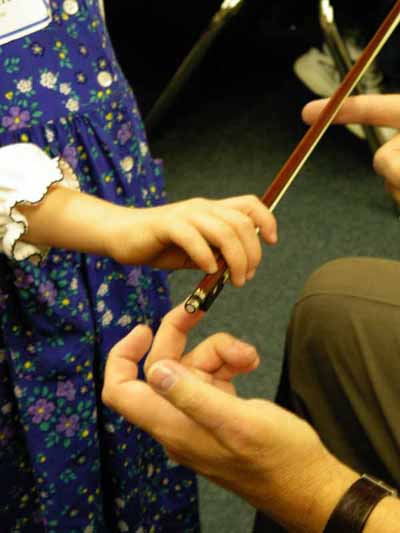
Last week my fourth grade students performed "Bile 'Em Cabbage Down," in full western country costume, for their music program.
On sea otters

I had a rare opportunity to watch a very friendly sea otter, one of my favorite animals, at play at a wildlife preserve near Monterey a few weeks ago.
He was catching crabs and putting on a show for tourists right by the shore of the estuary.
Global warming
Right now I'm not sure I understand the environmentalists who complain about global warming. I live in Southern California, it's almost May, and it's been in the 50s in the day. Over in Ohio where my parents live, and where there apparently is global warming, the weather has been nicer and more Spring-like than here. When my poor parents came to visit this frigid place in March, my mom and I went to Pasadena and forgot our jackets. As we were shivering in our boots, someone with a clipboard standing on the street corner asked us to sign a petition about global warming. We could have used some of that this winter.
Lessons from a pencil sharpener
I fired a student today. I don't like to do that very often, but sometimes circumstances make it impossible to do otherwise. Once in a while it's a schedule issue, but usually the reason involves working with the parent. I've never fired a student because of his or her playing ability or even motivation if the parent is willing to work together with her child and with me to make practicing work. But when I have a parent who shows no respect for me, or for the process of learning the violin (i.e. "Why do we have to practice this piece again? Why do we have to work on bow holds over and over? Can't Bobby just go ON TO THE NEXT PIECE?!"), then each lesson is a drudgery and a chore for me.
This mother just yelled. Just yelled. Literally--increased decibel levels. I've never had a parent yell at me before. My method of teaching is wrong, I won't listen to her ideas, and why can't her son just go on to the next piece? And she starts her yelling fits at the time the lesson is over, when it's time for another student. I won't take that, and I have plenty of other students to take his time slot. So she got the phone call.
"The phone call" is a difficult task for me. I'm a softie, I admit. I always want to give people, especially children, the benefit of the doubt, and one more chance. Should I have given her a warning--the next time you yell at me, I'll discontinue lessons for your son? But with encouragement from Karen, my colleague, I just did it. But I felt bad for her son, who will likely have to deal with his mother's relationships with other teachers in the future, and likely learn that in life you yell and yell until there is nobody left to yell at.
My next chore after I hung up with this mother was to sharpen my pencils. I have two very similar battery operated pencil sharpeners, Foray brand, that I bought at Office Depot for $4. Actually, I've had three. The first one quit working the first time I opened the shavings compartment to empty it. The second one I bought was the same; since I had liked the pencil sharpener before it stopped working, I thought it was just defective and I'd give another one a try. After all, it was only $4. It ate my pencils. The third was a slightly different model of the same brand, still $4. It does not sharpen pencils. If you stick a pencil in the hole, nothing happens. Both pencil sharpeners have been sitting on my desk for about six months. I brush the California desert dust off of them and keep trying them periodically. No avail. I tried both of them again today. They broke two pencils.
Today I decided to throw away both pencil sharpeners. I realized that with the best of intentions, there are some things that you can't fix, no matter how much you wish you could. The basis for the Suzuki method is, as the title of the Suzuki "bible" says, Nurtured by Love. It's an opportunity for a parent and a child to deepen their relationship by working together on a project, one that requires time and patience to gradually work toward excellence in artistic achievement. The role of the teacher is to guide the parent along in the process. If that's not the object of violin lessons, it's as hopeless as a pencil sharpener that doesn't sharpen pencils, or eats them to a stub (a dull stub, nonetheless). And if you don't get it, you don't get it.
Soon I will go back to Office Depot and invest a little more in a better pencil sharpener. Not a Foray brand.
This mother just yelled. Just yelled. Literally--increased decibel levels. I've never had a parent yell at me before. My method of teaching is wrong, I won't listen to her ideas, and why can't her son just go on to the next piece? And she starts her yelling fits at the time the lesson is over, when it's time for another student. I won't take that, and I have plenty of other students to take his time slot. So she got the phone call.
"The phone call" is a difficult task for me. I'm a softie, I admit. I always want to give people, especially children, the benefit of the doubt, and one more chance. Should I have given her a warning--the next time you yell at me, I'll discontinue lessons for your son? But with encouragement from Karen, my colleague, I just did it. But I felt bad for her son, who will likely have to deal with his mother's relationships with other teachers in the future, and likely learn that in life you yell and yell until there is nobody left to yell at.
My next chore after I hung up with this mother was to sharpen my pencils. I have two very similar battery operated pencil sharpeners, Foray brand, that I bought at Office Depot for $4. Actually, I've had three. The first one quit working the first time I opened the shavings compartment to empty it. The second one I bought was the same; since I had liked the pencil sharpener before it stopped working, I thought it was just defective and I'd give another one a try. After all, it was only $4. It ate my pencils. The third was a slightly different model of the same brand, still $4. It does not sharpen pencils. If you stick a pencil in the hole, nothing happens. Both pencil sharpeners have been sitting on my desk for about six months. I brush the California desert dust off of them and keep trying them periodically. No avail. I tried both of them again today. They broke two pencils.
Today I decided to throw away both pencil sharpeners. I realized that with the best of intentions, there are some things that you can't fix, no matter how much you wish you could. The basis for the Suzuki method is, as the title of the Suzuki "bible" says, Nurtured by Love. It's an opportunity for a parent and a child to deepen their relationship by working together on a project, one that requires time and patience to gradually work toward excellence in artistic achievement. The role of the teacher is to guide the parent along in the process. If that's not the object of violin lessons, it's as hopeless as a pencil sharpener that doesn't sharpen pencils, or eats them to a stub (a dull stub, nonetheless). And if you don't get it, you don't get it.
Soon I will go back to Office Depot and invest a little more in a better pencil sharpener. Not a Foray brand.
Subscribe to:
Posts (Atom)